

Drillships mobilize for Equinor’s $9B Raia project in Brazil, Egypt launches a four-well gas campaign, and Borr Drilling eyes five new jackups in Mexico
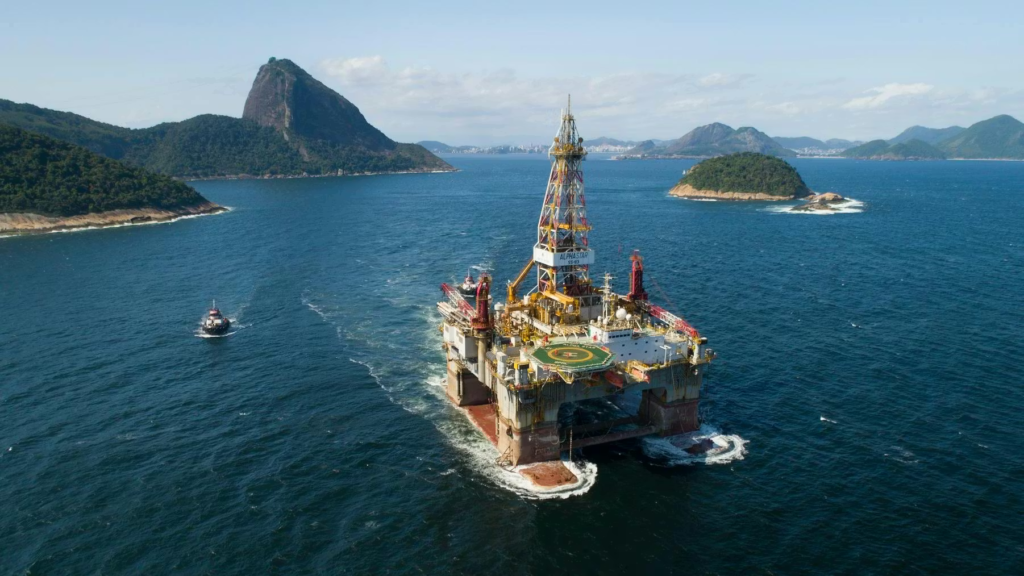
Drilling activity surges from the Campos Basin to the Mediterranean as major operators commit billions to new campaigns
The global offshore drilling market opened the final week of March on a busy note, with development drilling kicking off at one of the industry’s most closely watched deepwater projects, a new gas-focused exploration campaign getting underway in Egypt’s Mediterranean waters, and fleet consolidation moves reshaping the jackup market in Mexico.
Raia takes shape in Brazil’s presalt
The drillship Valaris DS-17 spudded the first of six development wells for Equinor’s Raia project in the presalt Campos Basin on March 24, marking the formal start of what the Norwegian major describes as its single largest project currently under execution — and the deepest-water development in its entire global portfolio.
Raia sits approximately 200 kilometers offshore Brazil, in water depths of around 2,900 meters. The oil, condensate and gas project is designed to recover more than one billion barrels of oil equivalent, with production targeting up to 16 million cubic meters of gas per day when the associated FPSO comes online in 2028. According to Equinor, that output could satisfy roughly 15% of Brazil’s domestic gas needs.
The project partnership brings together Equinor as operator alongside Repsol Sinopec Brasil, holding 35%, and Petrobras with 30%. All three worked together previously on the Bacalhau deepwater field, where the DS-17 was also deployed. Total investment in the Raia project stands at approximately $9 billion.
Geir Tungesvik, Equinor’s Executive Vice President for Projects, Drilling and Procurement, said integration and commissioning work on the FPSO was progressing in parallel with the drilling campaign. Gas produced at Raia will travel through a 200-kilometer pipeline to the onshore terminal at Cabiúnas in the state of Rio de Janeiro.
Equinor expects the FPSO to rank among the most carbon-efficient production units in global operation, targeting an average CO₂ emissions intensity of around 6 kilograms per barrel of oil equivalent.
Egypt relaunches Mediterranean gas push
Across the Atlantic, Arcius Energy — the joint venture between bp and ADNOC — has mobilized the seventh-generation drillship Valaris DS-12 into Egyptian territorial waters to begin a four-well offshore gas drilling program in the eastern Mediterranean.
The campaign encompasses two wells for bp — one development and one exploration — followed by two gas exploration wells for Arcius Energy, targeting the Atoll West and Nofret prospects, both considered high-potential gas exploration targets in the region. The DS-12 arrived after undergoing operational readiness and safety inspections in Las Palmas, Spain.
The program is framed within Egypt’s broader 2026 upstream strategy, which envisions more than 100 exploratory wells in cooperation with international partners over the next five years.
Borr Drilling expands Mexican jackup fleet
In shallow water, Borr Drilling has agreed to acquire five jackup rigs from Fontis Finance for a combined price of $287 million. The deal will be executed through BC Ventures, a 50-50 joint venture between Borr subsidiaries and their Mexican well construction partner.
The five rigs — two Friede & Goldman JU-2000E designs and three LeTourneau Super 116-C units — are currently located in Mexico. CEO Bruno Morand described the acquisition as attractively priced, with lower debt-per-rig and cash breakeven levels than the company’s existing fleet. The transaction is expected to close during the third quarter of 2026, pending merger control approvals.
Constellation delivers strong 2025 results
Brazilian contractor Constellation Oil Services closed 2025 with net revenue of $597 million, a 6% year-on-year improvement, supported by fleet utilization of 95%. The company expanded its third-party asset management business during the year, taking on operational responsibility for the Hanwha Ocean-owned drillship Tidal Action, which began drilling for Petrobras on the Roncador Field last September, and the ADES jackup Admarine 511, which started a long-term plug-and-abandonment campaign for Petrobras across four offshore basins in November.
CEO Rodrigo Ribeiro said the company was positioned to capture opportunities in the next Brazilian offshore growth cycle.
The Waterline Report
The convergence of events this week reveals how much weight Brazil’s presalt continues to carry in global offshore strategy. Equinor’s $9 billion Raia commitment — the company’s largest international investment — confirms that ultradeepwater development in the Campos Basin remains a structural priority even as energy transition pressures reshape portfolios elsewhere. For decision-makers tracking drillship demand, the simultaneous deployment of two Valaris seventh-generation vessels across Brazil and Egypt in the same week is a signal worth watching: the premium drillship market remains tight, and that tightness is likely to persist as campaigns deepen and expand.