

Everllence and Vale have signed a cooperation agreement to develop ethanol-powered marine engines, positioning Brazil and China as key markets for the fuel’s maritime adoption
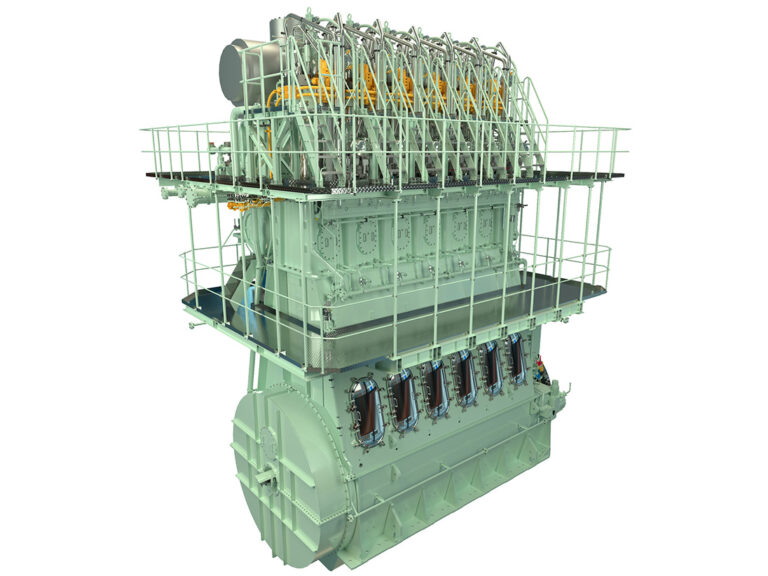
The decarbonization of large-scale shipping has a new alliance: Everllence — the engine manufacturer formerly known as MAN Energy Solutions — and Brazilian mining and logistics conglomerate Vale have formalized a cooperation agreement to develop ethanol as a commercially viable marine fuel, with the two parties co-developing an advanced engine platform built on proven dual-fuel technology.
A strategic pairing with deep industrial logic
The agreement centers on adapting Everllence’s B&W ME-LGI (liquid gas injection) engine platform for ethanol operation. Vale describes the partnership as aligned with its multifuel, future-ready fleet strategy — a deliberate effort to build flexibility into its affreighted fleet while reducing greenhouse-gas emissions.
The timing reflects momentum that has been building at Everllence for over a year. In September 2025, the company ran a 90-bore, two-stroke ME-LGIM engine on ethanol at all load points in Japan — a development it described as a world first. By December, a four-stroke 21/31 dual-fuel GenSet had completed ethanol operation at all load points at the company’s test facilities in Denmark.
Christian Ludwig, Everllence’s Vice President and Head of Global Sales and Promotion for its Two-Stroke Business, said the agreement with Vale carried particular resonance in two specific geographies. Brazil, with its deep-rooted sugarcane ethanol industry, and China, which is expanding its own ethanol supply chain, represent the markets where the company expects the collaboration to generate the most commercial traction.
Vale as a maritime decarbonization anchor
Vale is not a passive partner in this dynamic. The company already has a track record of engaging engine manufacturers on alternative propulsion — Everllence had previously announced that methanol engines would be fitted on Vale-chartered bulkers, a separate but complementary strand of the same multifuel strategy.
The logic for Vale is straightforward: as one of the world’s largest dry bulk shipping customers, managing the carbon footprint of its chartered fleet has both regulatory and reputational implications. Positioning ethanol — a fuel where Brazil holds a structural supply advantage — as a credible marine option aligns commercial interest with national industrial policy in a way that few other fuel pathways can offer.
Regulatory backdrop
The agreement arrives as IMO’s GHG reduction targets impose increasingly concrete obligations on shipowners and operators. Ethanol’s Well-to-Wake emissions profile, while dependent on production method, compares favorably with conventional marine fuels when sourced from sugarcane, and it benefits from an existing global distribution infrastructure more developed than that of ammonia or hydrogen.
For engine manufacturers, the ability to offer a fuel-flexible platform that spans methanol, ethanol and eventually ammonia within the same hardware family is rapidly becoming a competitive necessity rather than a differentiator.
The Waterline Report
The Everllence-Vale agreement is worth reading as more than a bilateral technology deal. It reflects a deliberate Brazilian industrial bet: that sugarcane ethanol, already the backbone of the country’s road transport decarbonization, can be repositioned as a globally significant marine fuel. Vale’s fleet volumes give that bet real commercial weight. If even a fraction of the dry bulk tonnage moving Brazilian iron ore and other commodities can be converted to ethanol propulsion, the demand signal to bunkering infrastructure investors would be substantial. The mention of China as a co-target market is equally telling — Beijing has been building out its own ethanol supply chain, and a Vale-Everllence collaboration that bridges both markets could accelerate the timeline for ethanol’s credibility as a mainstream bunker option in ways that a single-country pilot program cannot.